
How long floors last, and what refinishing means
A wood floor that can be refinished can stay in use for generations. That ability has traditionally set real wood apart from other flooring types. Refinishing also lets you change the look without tearing the floor out. Many buyers don't realize that both solid and engineered wood can be refinished.
- The NWFA defines refinishing as sanding a finished floor down to bare wood, then applying new stain or finish.
- Color and sheen can be changed when you refinish, for a remodel or to suit a new owner's taste.
- A report by IVL, the Swedish Environmental Research Institute, found refinishing more sustainable than tearing out and replacing a wood floor.
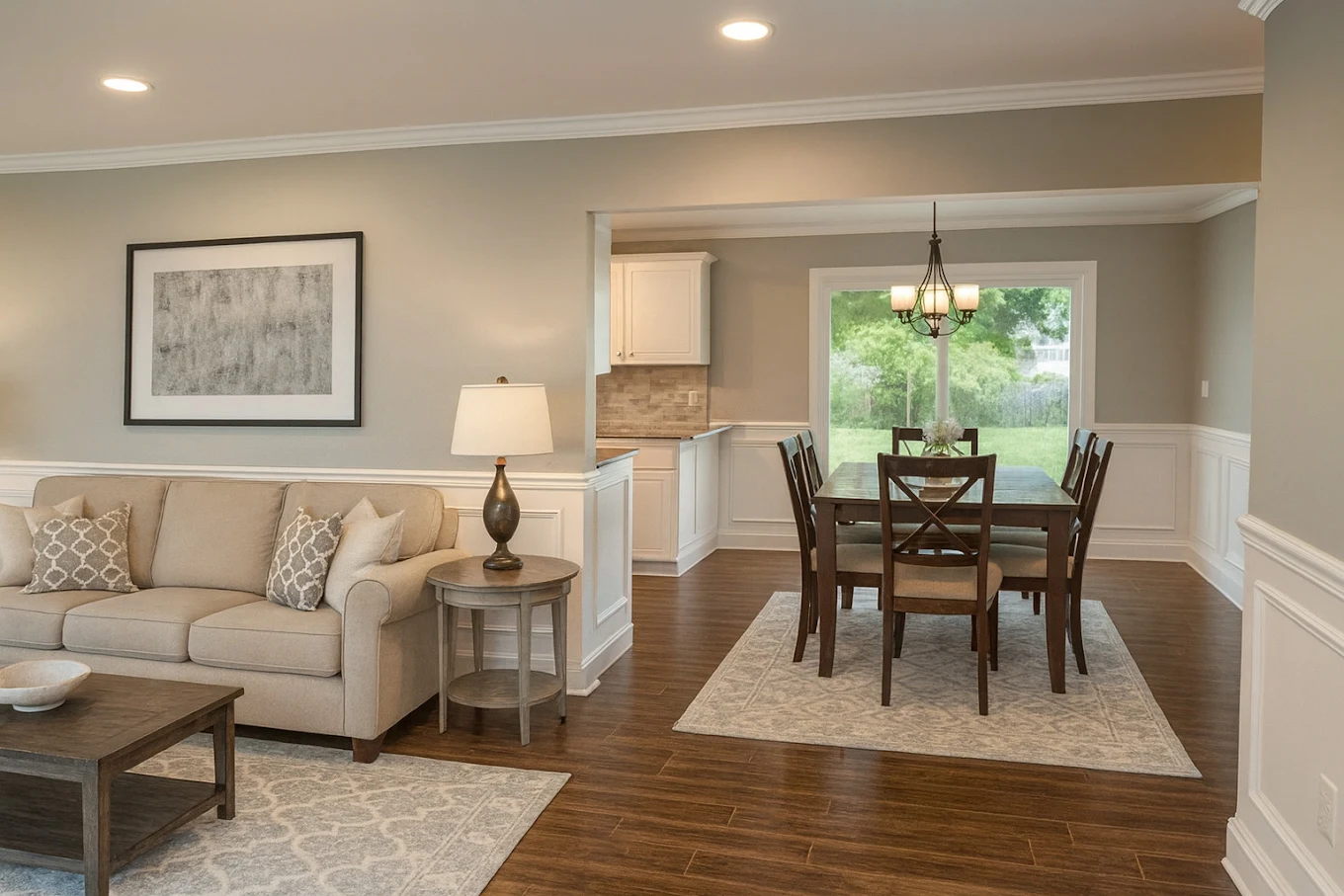
Crown, wainscot, hardwood — the whole level finished in one pass
Engineered vs. solid hardwood: check the wear layer
Whether an engineered floor can be refinished depends on the thickness of its real-wood top layer, called the wear layer. Ask for that number before choosing between engineered and solid. Treat any claim either way as something to verify for your specific product and room.
- NWFA minimum wear layer for unfinished smooth engineered flooring: 3.2 mm (4/32").
- Factory-finished smooth engineered flooring: 2.5 mm (3/32") minimum.
- Sculpted or distressed flooring: 2.5 mm (3/32"), measured at the lowest point of the surface.
- NWFA sanding guidelines say a floor with less than 3/32" of wear layer generally should not be sanded.
- A sanding pass should remove very little wood. Older NOFMA guidance put it at under 1/32".
- Even the thinnest solid floors (3/8") in detail drawings back to 1916 had 4/32" wear layers, enough for at least one later refinish.
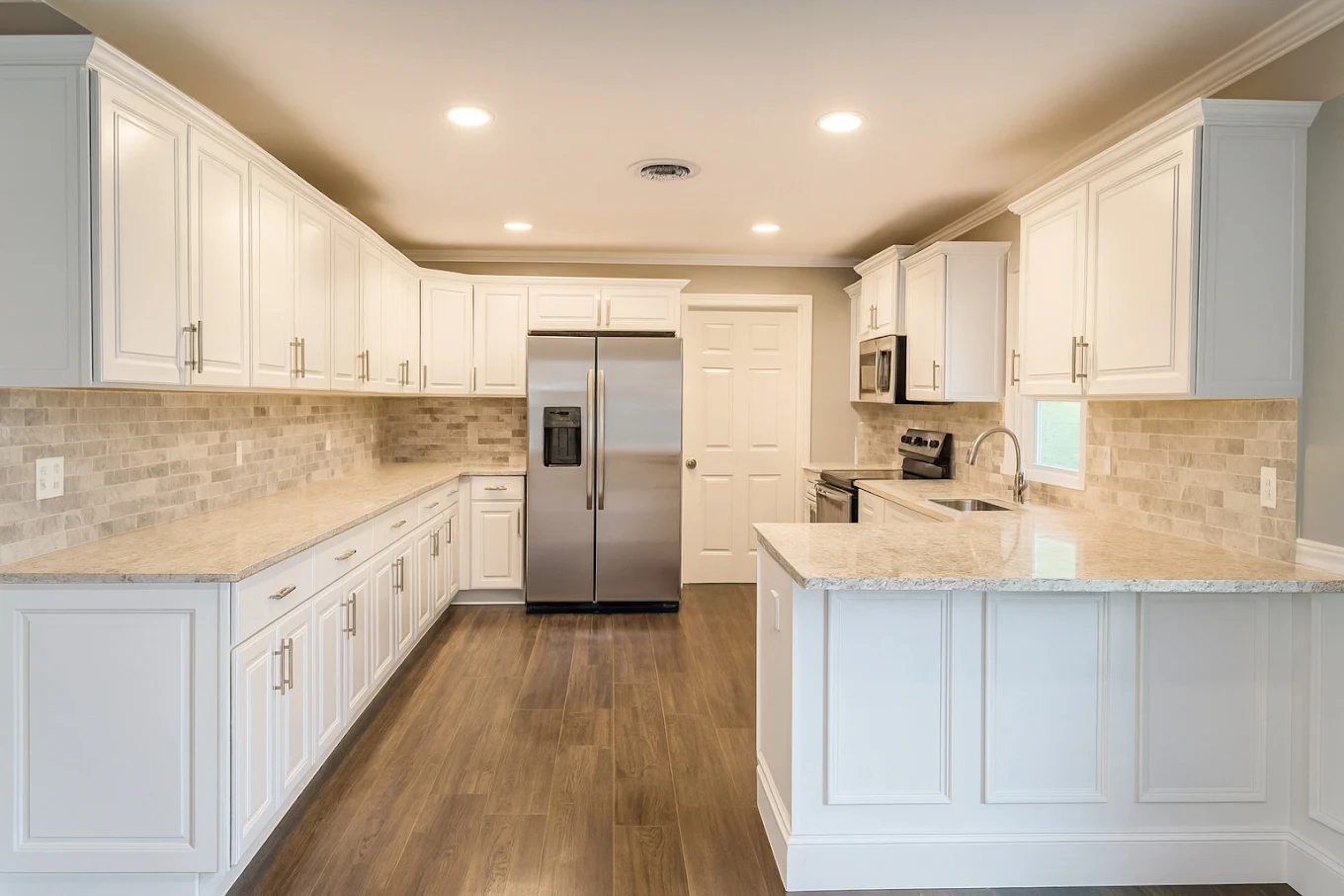
White cabinets, stone backsplash, plank floors — kitchen handed back spotless
Telling real wood from wood-look floors
Many floors in a store look like wood but cannot be refinished. Layered construction and loose marketing language make products hard to tell apart.
- Look for the NWFA Certified Refinishable logo, which marks engineered products with a wear layer thick enough to refinish.
- European makers reserve the name "parquet" for floors whose genuine wood surface measures 2.5 mm or more.
- Ask for the wear layer thickness in writing rather than relying on photos or the word "wood" on a display.
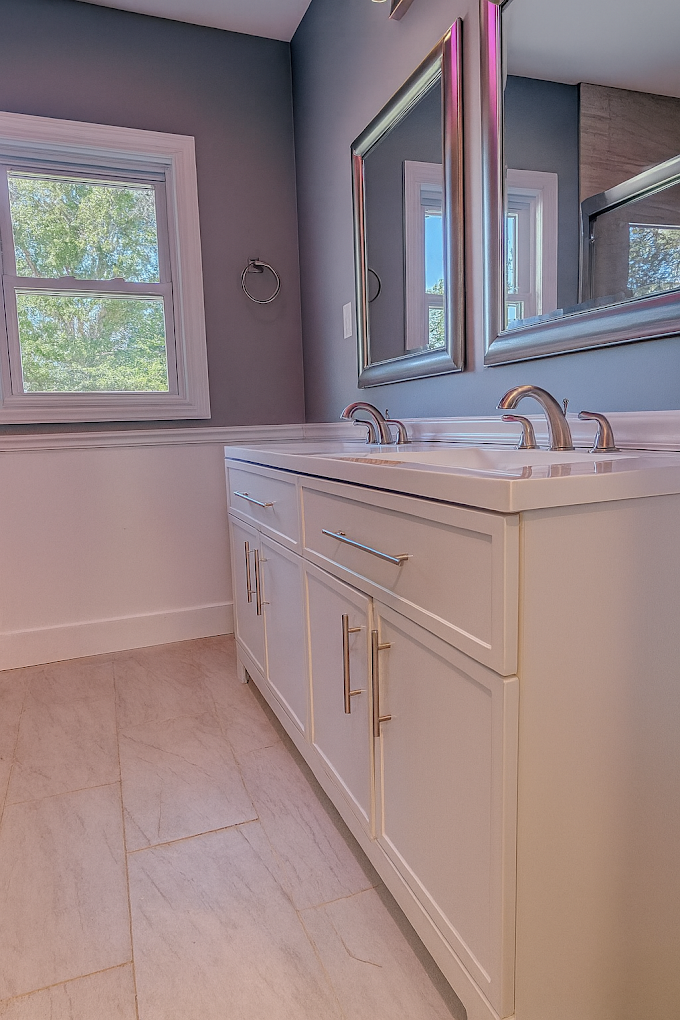
Double vanity, framed mirrors, stone floor — the same room, handed back
Bathrooms, kitchens and basements
This guide can't say which floor type suits a wet or below-grade room. The source material here doesn't cover moisture performance, so check the manufacturer's guidance for the exact product you're considering. When Interior Image quotes a job, the written estimate lists the work, materials and steps before anything starts, in plain language and in the order they'll be done, so you can see exactly what you're paying for.
- You get a custom proposal built for your job, not a generic estimate.
- If something hidden turns up, you hear about it before anyone spends your money.
When you're ready to price it
Once you've narrowed down the floor type, the next step is a measurement and a written number. Interior Image measures and quotes in one visit, and the estimate is free and comes with no pressure. What we quote is what you pay.
- Call (443) 880-7507. We're open 7 days a week, 7 AM to 6 PM.
- Or send the form, and we'll call you back, usually the same day, to set a time to measure.
- One crew stays on your job, and the site is swept at the end of every day.
Common questions
How long does each floor type last, and can it be refinished?
Solid wood can be refinished. Engineered wood can be refinished if its wear layer meets the NWFA minimums of 2.5 mm (3/32") for factory-finished products and 3.2 mm (4/32") for unfinished ones. The source here doesn't give lifespans for non-wood floors.
Is engineered hardwood a better choice than solid hardwood in Maryland's humidity?
The NWFA material cited here doesn't compare how solid and engineered wood handle humidity, so it can't settle which is better. It does show that engineered wood can be refinished like solid wood if the wear layer is thick enough. Check that number and the manufacturer's moisture guidance for your room.
Which flooring suits bathrooms, kitchens, or basements?
The sources behind this guide don't cover wet or below-grade rooms, so check the manufacturer's guidance for the specific product. If you get a quote from Interior Image, the written estimate spells out the work, materials and steps before anything starts.
Next step
When you've narrowed your options, see how flooring installation is measured and quoted in writing.
Flooring installationSources
- NWFA Launches Engineered Wood Flooring Refinishable Program – Hardwood Floors Magazine — hardwoodfloorsmag.com